

25 years Sabyasachi
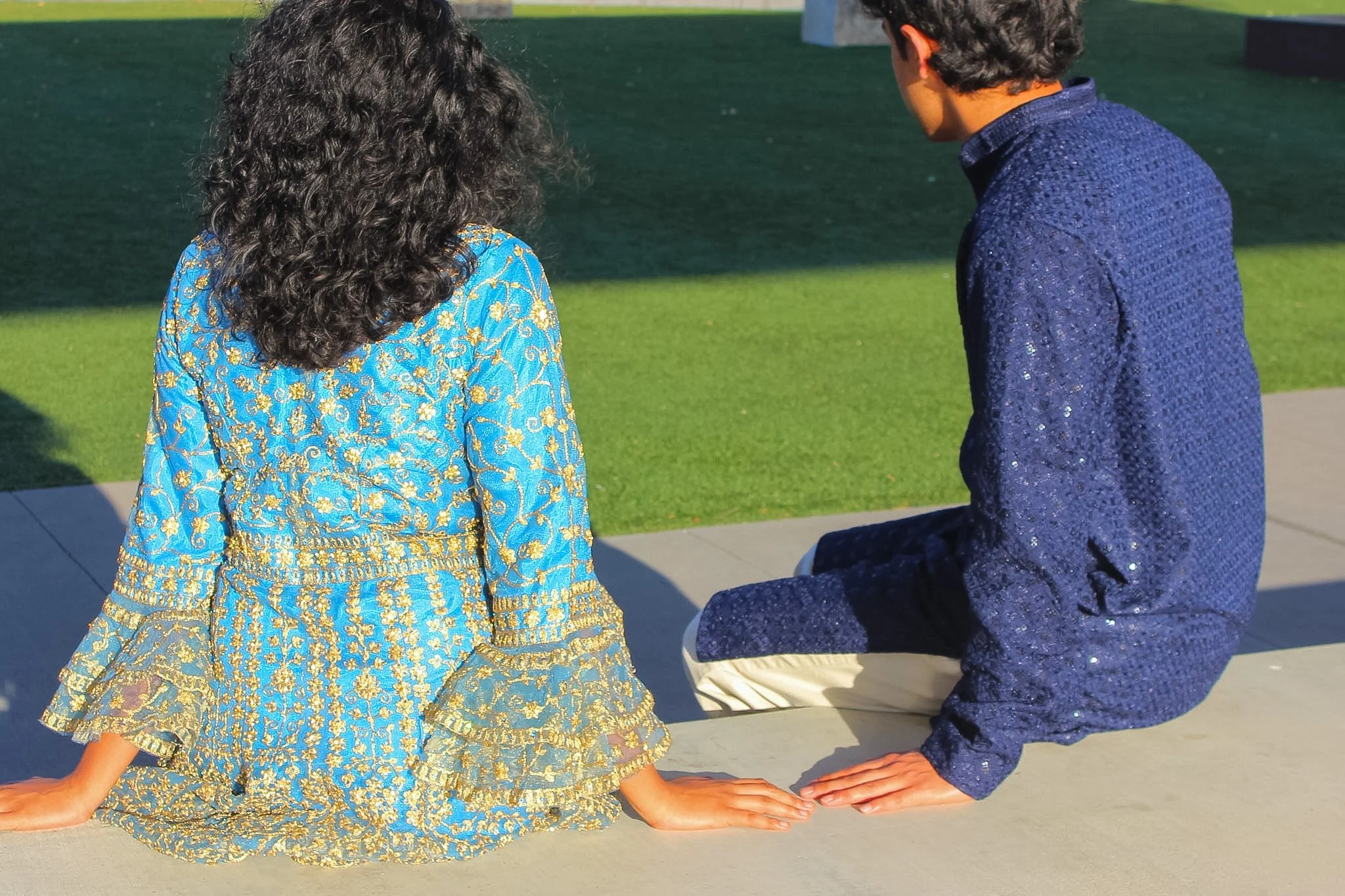
Sabyasachi (सव्यसाची)—meaning “ambidextrous,” or “one who can use both his hands equally well,” is an epithet of the hero Arjuna from the Hindu epic Mahābhārata, signifying great dexterity, skill, and influence. This is a fitting title for Indian fashion designer Sabyasachi Mukherjee, whose eponymous label, Sabyasachi, has recently celebrated 25 years of couture as the premier Indian luxury fashion house. Mukherjee describes his work as “an International styling with an Indian soul,” seeking inspirations both from global sources (French impressionist art, street photography, New York jazz clubs, nightlife, and Paris) and from regional culture (Banarasi textiles, Kashmiri rugs, Tanjore paintings, Parsi embroidery, local wildlife, and his hometown Kolkata). This confluence created a new, refreshing line of work that inspires fellow South Asian artists to follow artistic professions and bring traditional and modern Indian heritage to the world’s stage.
Sabyasachi Mukherjee grew up in a middle-class household in Kolkata, India, and graduated from New Delhi’s National Institute of Fashion Technology. Mukherjee was aware of the risks he was taking; in South Asia, a profession in the arts is considered non-traditional and is constantly under threat due to limited financial security and prospects, especially for economically deprived communities and middle-income groups. The arts face unpredictability and a lack of respect, placing nearly anyone who pursues such a career toward the lower end of the social hierarchy. In an industry where establishment and prior wealth dominate creative success, Mukherjee faced intense familial opposition and severe financial hardships. Against all odds, he gained traction and launched his label in 1999 with a mere three employees and a loan from his sister. After pursuing an internship under Georgina von Etzdorf in London, his first international trip, he returned to India with a fresh worldview and innovative ideas and gained rapid industry recognition for his “Kashgaar Bazaar” collection at India Fashion Week in 2002, launching his signature aesthetic.
Mukherjee sought to pay homage to his roots through The Sabyasachi Art Foundation, a dedicated collective of underprivileged artists established to revive and preserve age-old art forms, including textiles. Mukherjee created the foundation in honor of his mother, who “had to sacrifice her talent because of [their] lack of privilege and financial constraints.” By challenging the status quo, he ensures that the next line of great artists and creatives is enabled to reach great heights, just as he did.
Over the years, Sabyasachi has also partnered with several high-profile international designers, such as Christian Louboutin. Beginning with an initial collaboration in 2015, the duo first partnered for Sabyasachi’s Autumn/Winter 2015 couture show in Mumbai, where Louboutin designed 80 pairs of custom handbags and shoes. This partnership expanded into another 2016 runway show, but their most significant release was an exclusive capsule shoe collection, combining Louboutin’s signature red soles with Sabyasachi’s intricate embroidery and textiles.
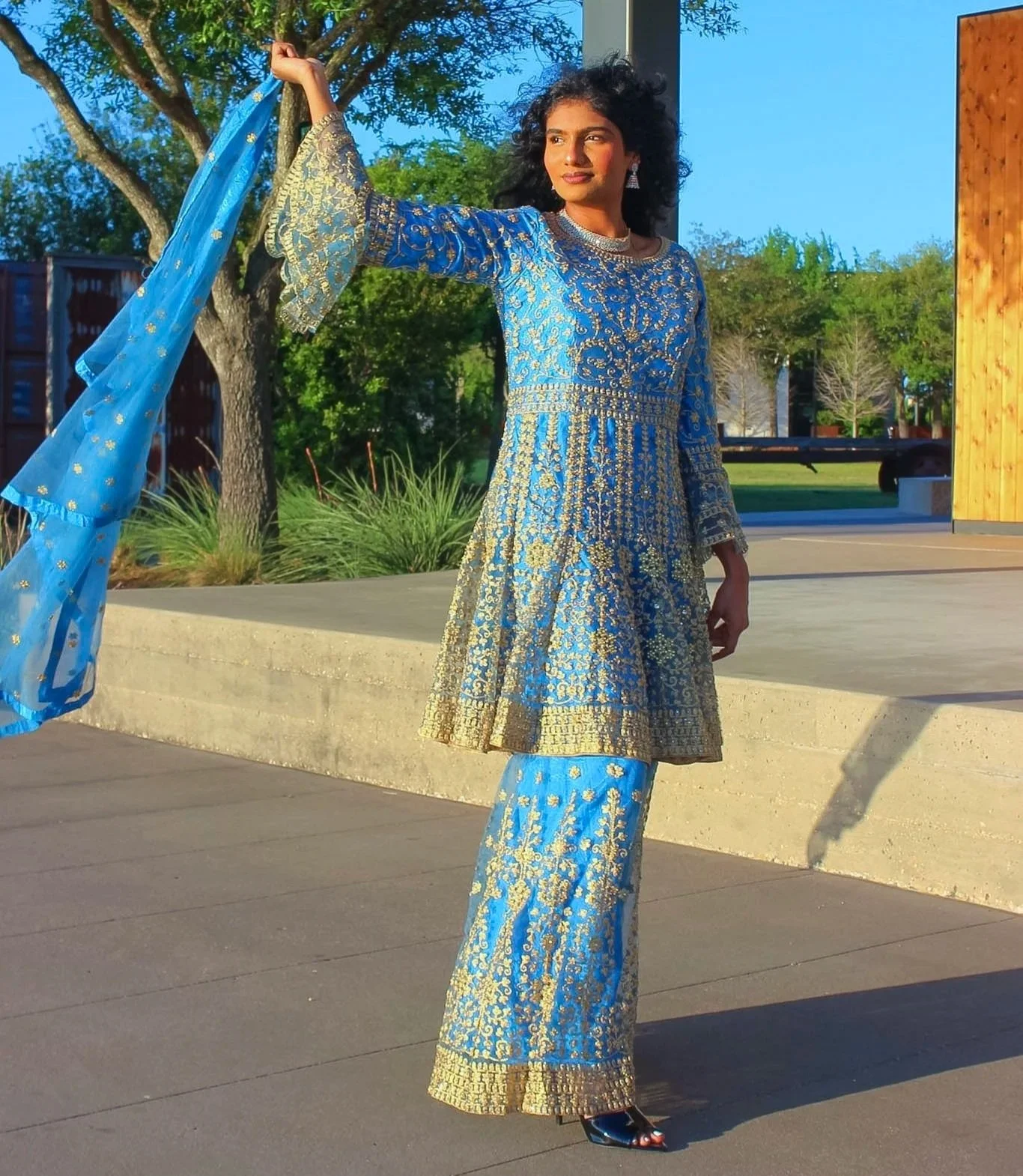
In January 2025, Sabyasachi celebrated its silver jubilee with a star-studded runway show in Mumbai. The collection, “Sabyasachi 25 Years,” featured over 150 meticulously styled lehengas, sarees, sherwanis, and anarkalis with rich, colorful fabrics, such as silk, velvet, organza, and brocade. These textures were layered with intricate embroidery—including zardozi, sequins, beadwork, mother-of-pearl inlay, and cut glass—to emphasize handcrafted elements. A fusion of heritage and modernity, this collection told stories that appealed to a global audience while staying true to Indian culture. One piece, a crimson silk lehenga (a ceremonial blouse and ankle-length skirt), showcased traditional hand-stitched Indian floral and paisley motifs, with a matching sheer dupatta embroidered with a scalloped border. The look was layered with antique gold jewelry, including a choker, long necklaces, and a maang tikka (a forehead ornament). As a whole, this look revered traditional Indian bridal wear, showcasing centuries of culture through wearable art.
This wearable art is not restricted to clothing: in 2017, Mukherjee launched Sabyasachi Heritage Jewelry, a distinct line focused on preserving ancient Indian jewelry techniques. This includes Jadau, a rustic yet sophisticated jewelry form originating from the Mughal era and perfected in Rajasthan, constructed by embedding uncut precious stones and pearls into gold, often featuring intricate Meenakari (decorated enamel work). This is a very labor-intensive process, as unlike many modern jewelry types, Jadau rarely uses glue, opting for heat and pressure to set each stone. There is also Nakashi, a southern Indian ornamental craft using fine brushes and natural pigments to create detailed images directly on metal surfaces. Another technique of Nakashi involves engraving directly on a sheet of gold to produce a three-dimensional effect. The imagery is deeply symbolic and storytelling in nature, drawing on religion, mythology, and history through depictions of gods and goddesses, sacred symbols, royal courts, battles, and scenes from Hindu epics. Often used to embellish bridal jewelry, these heirlooms are not just ornamental but also carry the narrative essence of the past.
Though everything from Sabyasachi is a product of intensive time, effort, and creativity, the fashion house emphasizes that, in ancient India, expressions of opulence were far more fluid than today, and maximalist displays were celebrated rather than judged as “too much.” Believing in the borderless approach to self-expression that dominated India before colonial or modern Western influences, Sabyasachi seeks to reignite this fire in Indian society and worldwide. According to Mukherjee, “Maharajahs and musicians, warriors and thinkers—[were] confident in excess. They were never restricted by colours, shapes, or gender, their jewellery cut across the spectrum. This is the India that I want to preserve.”
Written by Nidhi Suraparaju, Photography: Mary Le, Design: Rutuja Wadekar, Social Media: Sahithra Kesavan, Styling: Anaya Hooda