

Part 1
The night grows darker, as strobe lights and passing silhouettes muddy into a blur of the senses. Feel the air’s grasp as sweat glistens a natural glow. The moment has consumed you with only a sensual flicker of remembrance. Bodies mesh into a whirlwind of movement as music rings out and deep against into the crevices of your skull. Entranced by the moment, your thoughts become a lost currency, and expressions take on a new form. The night’s darkness deepens; strobe lights continue their blinding sensation. Smoke thickens the air, drinks continue to flow, and skin presses tightly against itself. Amidst the humid, dense air and the blending aromas of sweat, sweetness, and the harsh sensations of liquor, the club takes shape: a moment detached from reality, a new persona invoked, the personification of Brat. Inevitably, the night will grow darker as the morning hours creep closer and closer, the club’s alluring nature beginning to crumble at the seams. Drinks will flow, the aromas will thicken, but you find yourself someplace else as the mind dissolves into questions. When the morning hours turn, what’s left to discover?
Part 2
Charlotte Aitchison, better known under her stage name Charli XCX, seeks an answer to this question on her album Music, Fashion, Film, not just as a muse for creative redirection, but as a conscious consideration of her own public persona. Through the album’s cover, Charli juxtaposes expectations: that of the mutually familiar and the intrapersonal. Three juggernauts of cultural importance—John Cale, Marc Jacobs, and Martin Scorsese—are gathered, representing music, fashion, and film, respectively. Charli herself is absent from her album’s cover, but don’t let that fool you: the album uses the significance of music, fashion, and film as a social backdrop to discuss the ambivalent realities of stardom and the deconstruction of her own persona. John Cale, founder of renowned rock band The Velvet Underground, Mark Jacobs, household designer name, and Martin Scorsese, highly regarded director of the modern era, all hold their own in their respective mediums, but Charli didn’t just choose them for their status. Charli personally worked with John Cale on the creation of the Wuthering Heights soundtrack, citing his philosophy of music as both ‘elegant and brutal’ to be deeply inspiring. Marc Jacobs offered Charli XCX her first major fashion campaign during Spring/Summer 2018, and he played her music on the runway of Spring/Summer 2010. Finally, Charli chose Martin Scorsese to represent the underrepresented, those who dared to challenge artistic boundaries: the blueprint that Charli has followed. Through these personal connections, Charli subtly introduces Music, Fashion, Film as a deeply personal exploration as much as it is an appreciation of the arts, some of which tie deep into Charli’s long-lasting persona, and some a direct response to the cultural moment that was her previous album, Brat.
Across Charli XCX’s career, the struggle of balancing the desire for fame with experimental and critical recognition has remained a prominent theme of exploration. From singles-driven pop albums like Sucker, to hyperpop experiments such as Vroom Vroom, Charli often found herself sacrificing one for the other. This led to deep frustrations with the lack of mainstream appeal of albums such as her 2019 self-titled release Charli. In the spring of 2022, she released Crash, an album she quoted to be a direct attempt at Billboard success. Though the album went on to be one of her best charting, it failed to gain the respect past efforts did. This continuous struggle all seemed to change with the release of 2024’s Brat, where Charli’s hyperpop influences, catchy songwriting, and cleverly crafted aesthetics came together in groundbreaking fashion, bringing Charli to the center of pop-culture. In a matter of months, she was working with the likes of Billie Eilish, Ariana Grande, and Bon Iver, bridging distinct musical identities together into one defiant cultural movement. For many, a question arose: Where would Charli go next? Or better yet, Where could she go next? For many, Brat had defined Charli, and to veer too far from this new character could push these new audiences away, but at what cost does one seek to recreate success? For her next album, Charli took a different path, one that boldly killed the aesthetics pop culture grew to love.
The album begins with “Rock Music”—not the genre, but the title itself—an on-the-nose caricature of the genre brimming with satirical literalism and unorthodox grunge. Charli quickly presents her persona in its most raw form, stripping back the maximalist aesthetics of her last album. Lines such as ‘“Yeah we’re on to the next, I think the dance floor is dead” present an artistic transformation, while maintaining a satirical edge that begs the listener to dig deeper into its subtleties. On “SS26,” Charli describes the current state of the world as “walking on a runway that goes straight to hell,” with implications that fashion can’t save today’s society. Outside of its nihilistic lyricism, the song dives into persona and the fragility of protecting it in the age of the internet, a theme that gradually builds across the album. For example, on “Card Declined,” she metaphorizes the endless pursuits of shopping as artistic burnout, comparing identity and performance to the hollowness of consumerism. Charli explores her experiences with film on “Camera,” describing the fear that comes with shifting personas and discovering a new passion. In particular, she expresses the contrast between the moment, consumed by the freeing feeling of self-expression in a new medium, and the fear of straying too far from what you’re supposed to be. Finally, on the fittingly-titled “Persona,” Charli dissects the consequences of becoming consumed by a persona and the safeguards of ego. The song strays away from explicit name-dropping, but lines like “I know you see me when I see you” suggest the song presents Charli’s struggles between her true self and her persona. All of this, from the fragmented pieces of internal reckoning, to the satirical acceptance of change, culminates on the final song: “No One Lasts Forever.”
Part 3
Near the end of “No One Lasts Forever,” David Cronenburg, famed director and pioneer of the genre of body horror, speaks about a near-death experience, as his life flashed before his eyes. He recites that “he didn't think about art” and the years of work he had spent creating, but instead, he “thought about people.” This revelation leads to the idea of art as a means to immortality. Artists create, and sometimes those creations become engrained into human history, taught in every classroom, hung in the most exquisite art exhibits, and revered by the masses. But in all practicality, this belief of art is a facade. Sometimes it becomes immortalized, but that’s not the purpose that it serves when it’s created. We believe that somehow, this art exists outside of our own experiences, creating a legacy that will live on forever, but in a moment of death, why do we cling to the experiential? In its moments of creation, art is a reflection of the world around us, a culmination of our personal experiences and the methodologies of making sense of the present world. In this way, art is a direct replication of our relationships with others. After all, the emotions invoked originate from these personal experiences. Art guides us to make sense of the now. Take away the medium, and what’s left is just that: people and relationships, the emotions we all collectively feel. Through our unique paths of life, we create relationships that are unique to us, and as we die, those relationships die alongside us, forged into a piece of ourselves, detached from the physical world. As such, art isn’t a game of immortality, it’s the most temporary act you can partake in: a consideration of the emotions we feel today. Charli uses this story’s striking nature as a way to expose exactly where she plans to go, and that happens to be wherever her creative interests lead her next, shedding the worries of creating something immortal and instead embracing the moment. Without the expectations of her past personas, she’s able to give up the pursuit of perfection for something honest, and the worries of legacy becomes the liberation of self-expression.
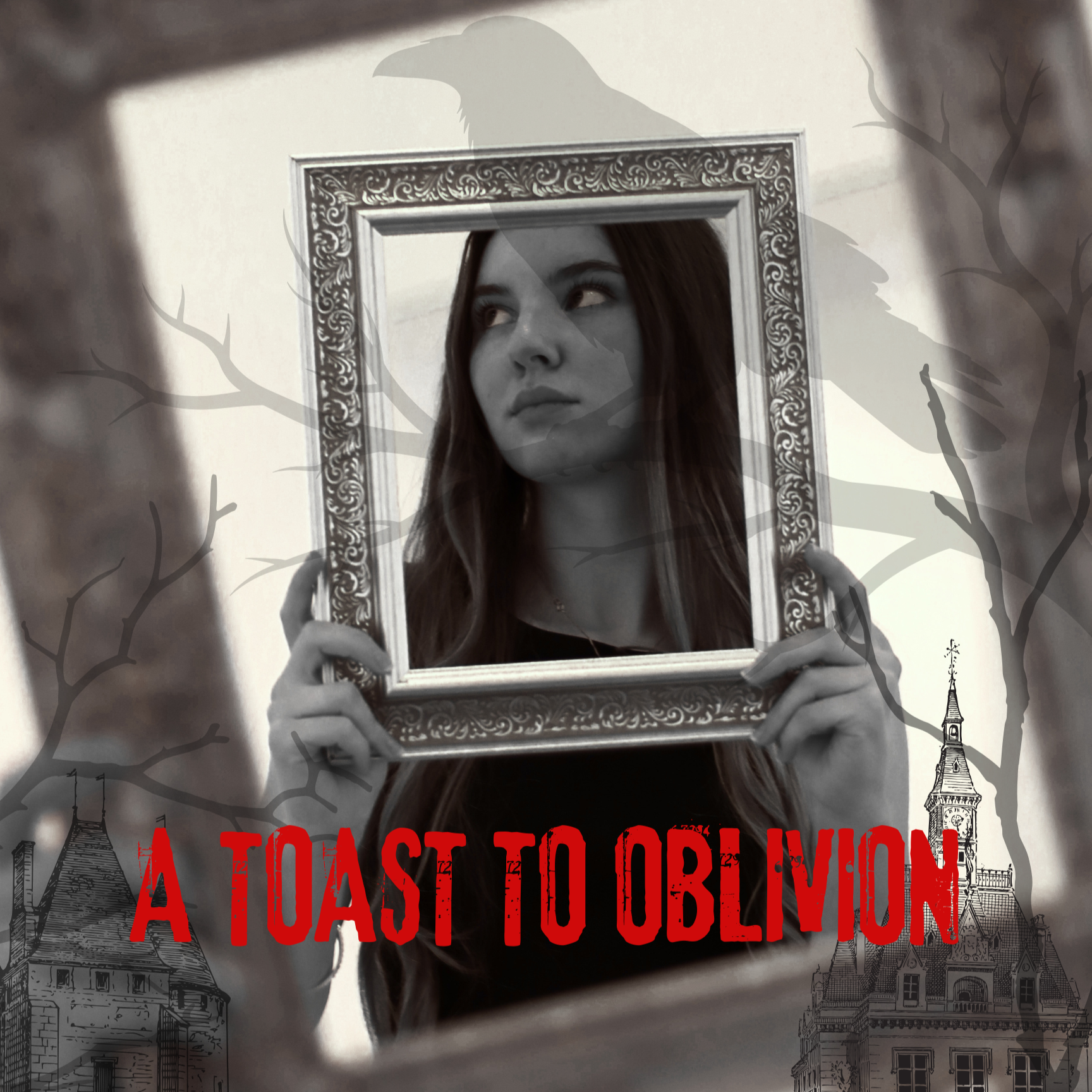
Maybe the club’s alluring pull has decayed as the morning sun peaks across the horizon, but the memories created have become a part of you, as you walk into the dreamy sunrise of tomorrow. Allow your identity to flow like the wind, attaching itself to the next journey’s dawn. As you look forward, let it be a toast to oblivion. A toast to conquering fears of the unknown, of dreams yet to have been dreamt; A toast to the freedoms that can only come about through self-realization; A toast to the beauty of embracing imperfection; And finally, a toast to the fleeting moment and the experiences that await us each day. As David Cronenberg utters in the final moments of Music, Fashion, Film: “hear me assure you that oblivion is freedom.”
Written by Landon Ward, Design: Katie Nguyen