

The depths of the glistening droplets each held a unique reflection as they fell gracefully from the clouded sky. A thousand worlds were enclosed within their invisible coats, each home to a story, and written with the whispers the wind did not choose to carry. They fell softly, but steadily. Enough to break the delicate bubble surrounding the memory that stretched thin and far, beckoned by a call of longing. From the years that came before, the sorrow stayed and made itself home within the same blood that came before it. To the years that would follow, it would disperse further and further, but never truly break. The world moves too fast for memory to become something real and visible, so the body becomes its home. The body and its history remembers what the world around it did not.
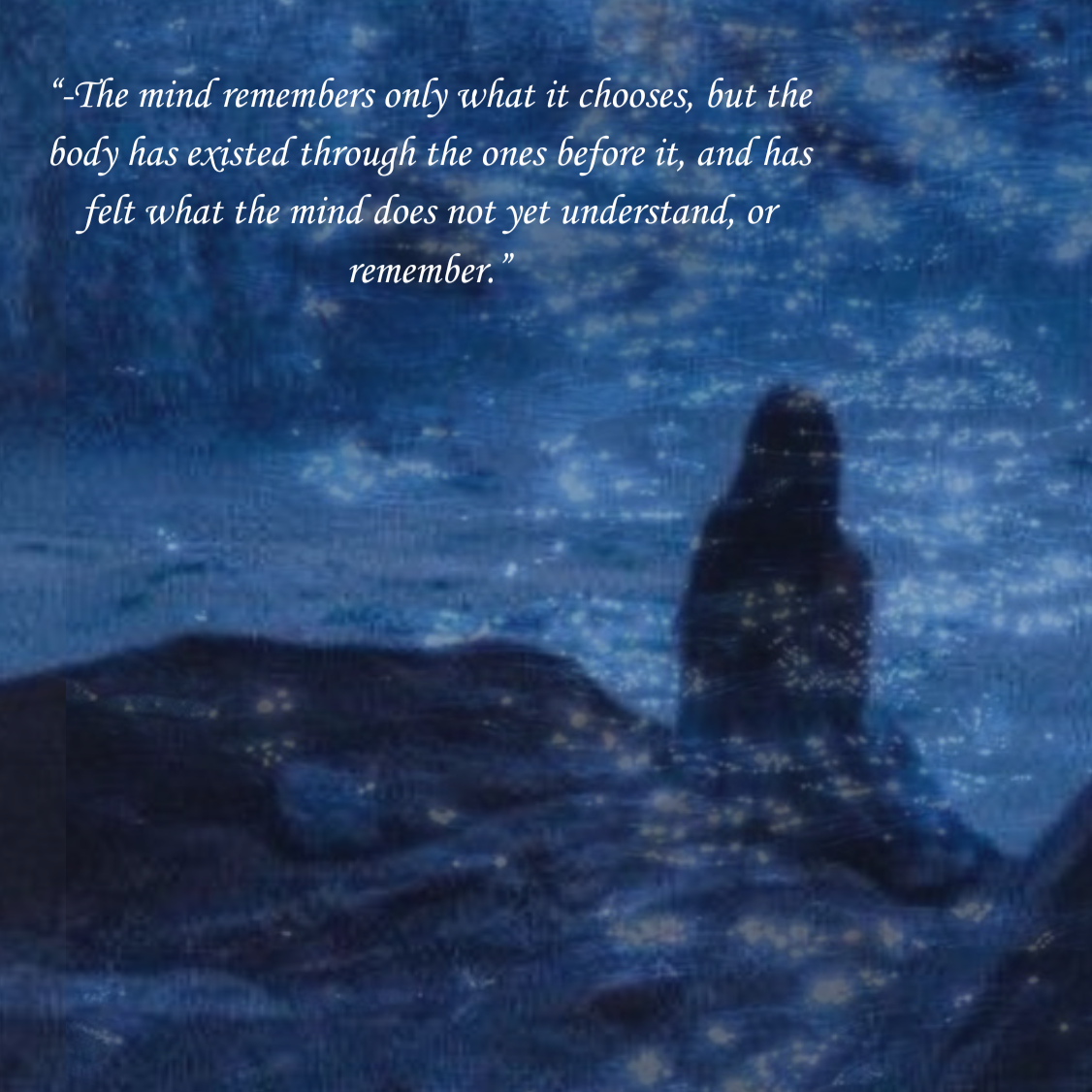
Memory, in its independence, is secretive of the past. It does not lie, but reveals only a droplet of history. In this context, history is not complete, but is a fluid remembrance of what remains and has not been forgotten. The mind remembers only what it chooses, but the body has lived through those who came before it, and has felt what the mind does not yet understand or remember. In this case, much of history could be said to be coveted deep within the body. This memory remains covered, not to deceive, but to protect itself in a deep knowing of what it has experienced in the past and expects in the future.
In the depths of the body, muscles tense in unwavering knowledge. They curl inward, moving at their own discretion. The air spills its secrets through scent and sound, and invisible hands move to usher the body to safety. A threat waits to strike, and the body prepares itself. The body stores this memory of trauma experienced before it, from grandmother, to mother, to daughter; her body remembers what her mind did not experience. Face, skin, hair, bones—the body is reconstructed time and time again, but its substance stays unchanged. Blood remains, and history lives in its crevices.
What moves a person? To wake up from a world of dreams and mysteries and move where they choose? To walk, to talk, to think, to watch—a choice is sometimes made with a gust of wind behind them. It is unknown why we choose what we choose, why we act the way that we do, and why the cloudiness of thought that we experience when we act before we think persists. The body moves before our mind decides when we are remembering something unclear that has perhaps happened long before we were there to witness it. Trauma cuts deep, sometimes so deep that it becomes undistinguishable in comparison to the rest of one's motivations. Like water, the sorrow that has been lived repeatedly within generations is fluid, not truly possessing a beginning or an end.
Written by Alaya Johnson, Design: Reece White