The History of Emojis! ୧(๑•̀ヮ•́)૭
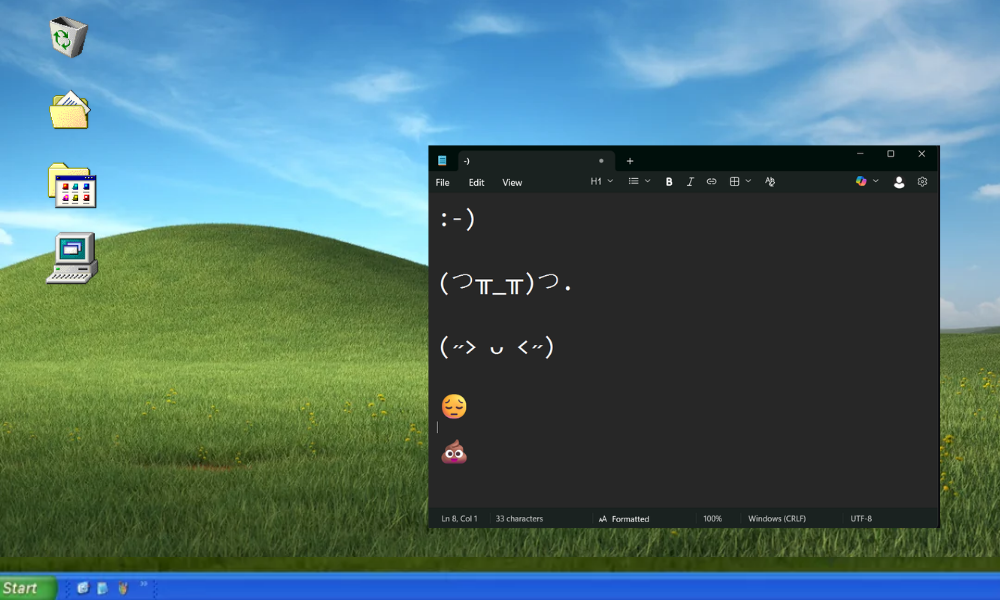
EMOJIS! What a blessing upon our emotionless textual world. Just look at the difference emojis can make on a simple message: “Can I ask you something?,” “Can I ask you something 💀,” and “Can I ask you something 😘” all have very different vibes and intentions, despite having the same words! It is so easy to see the impact that these little symbols have had on our ability to communicate through text. But… it was not always like this (ó﹏ò。). There was a time long long ago, back when screens were grey and your parents were still hunter-gatherers fighting for their survival, when text was completely emotionless—there was no way to tell if that email (yes, people used to talk through emails! ( ˶°ㅁ°) !!) was saying “You are so annoying 😡” or “ You are so annoying 😂”. It is hard to imagine such dark times, but it does make you wonder: How did we get here? 🤔
On September 19, 1982, something amazing happened at Carnegie Mellon University. Many of the professors had been using email to communicate, but miscommunication and arguments were rampant when messages that were supposed to be sarcastic were not taken that way! People were mad, people were distraught, and people needed a solution fast, so our great predecessor Scott Fahlman suggested a fix. He sent “I propose the following character sequence for joke markers: :-)”. And with that, emojis were born, here to bring emotion and context! Here to make the world of computers just a little bit more human! These emoticons, or emojis made up of text, immediately became popular across the entire US and evolved into the many emoticons we love today, like: ;), >:D, and XD. This desire to humanize text did not end in the west, as around the same time as these emoticons became popular, Japan created their own version called the Kaomoji. The Kaomoji is very similar to an emoticon, but so, so much better. Just take a look at these examples: (˶˃ ᵕ ˂˶), (๑·̀ᗝ·́)૭, and (つ╥﹏╥)つ. These Kaomojis took expression to a whole new level and immediately became beloved among the young Japanese generation. This explosion of kaomoji use in Japan eventually led to the release of the first-ever set of real emojis.
The year was 1999 when Shigetaka Kurita, a Japanese designer working for NTT DoCoMo, a mobile phone company, created that first batch of emojis. You can find them here, where you will very quickly notice that, for some awful reason, THERE ARE BARELY ANY FACES 😭! The first emojis were not meant to express emotions, but to make it easier to send small pictures that could be useful for the average person. It was not until a few years later that other Japanese mobile phone companies would start creating their own sets of emojis that were much more similar to the emojis we love today ♡⸜(ˆᗜˆ˵ )⸝♡!!! However, things were not all sunshine and rainbows; every single phone company had a set of emojis that only worked within phones they specifically produced. This means that if you and your best friend had phones made by different companies, they would never be able to see your cute emojis 😔! This issue arose from a much deeper problem that was tainting this early computer world: There was no standardized set of rules regarding what every computer and every phone should call every symbol!
This might be a bit weird to wrap your head around, but computers only understand 1s and 0s; to them, every letter is actually a sequence of 1s and 0s that represent everything from the letter “a” to the emoji 💩. These 1s and 0s are known as “encodings,” and the only reason that you can send any symbol, any emoticon, or any emoji to your friends knowing that it will appear on their end is because of Unicode 🔥! Unicode is basically a set of encodings that everyone in the entire world agreed to use so that we would no longer have this issue. Thanks to this agreement, everyone is able to access all the same emojis! In fact, you can even make your own emoji! 🥳 as long as you are willing to go through several pages of documentation and wait 2 years… ( - ⌓ - ).
All of this led to the final outbreak of emojis that brought them into the western hemisphere and into worldwide renown. In 2007, Apple released the first iPhone, equipped with a digital keyboard. This was already groundbreaking, but also meant that every language had its own keyboard you could activate. It was not long before Americans found out that Japan had a special button on their keyboards for emojis 🤯! Emojis soon exploded in popularity across the West and, as we know today, became a staple in all textual communication. So the next time you send a boring emoji-less text, remember all of the work that it took to have worldwide emojis, and add some emotion into that text!
Written by Jonathan Herrera, Design: Maahi Kesaria, Social Media: Sahithra Kesavan