

A Rivalry of Desire
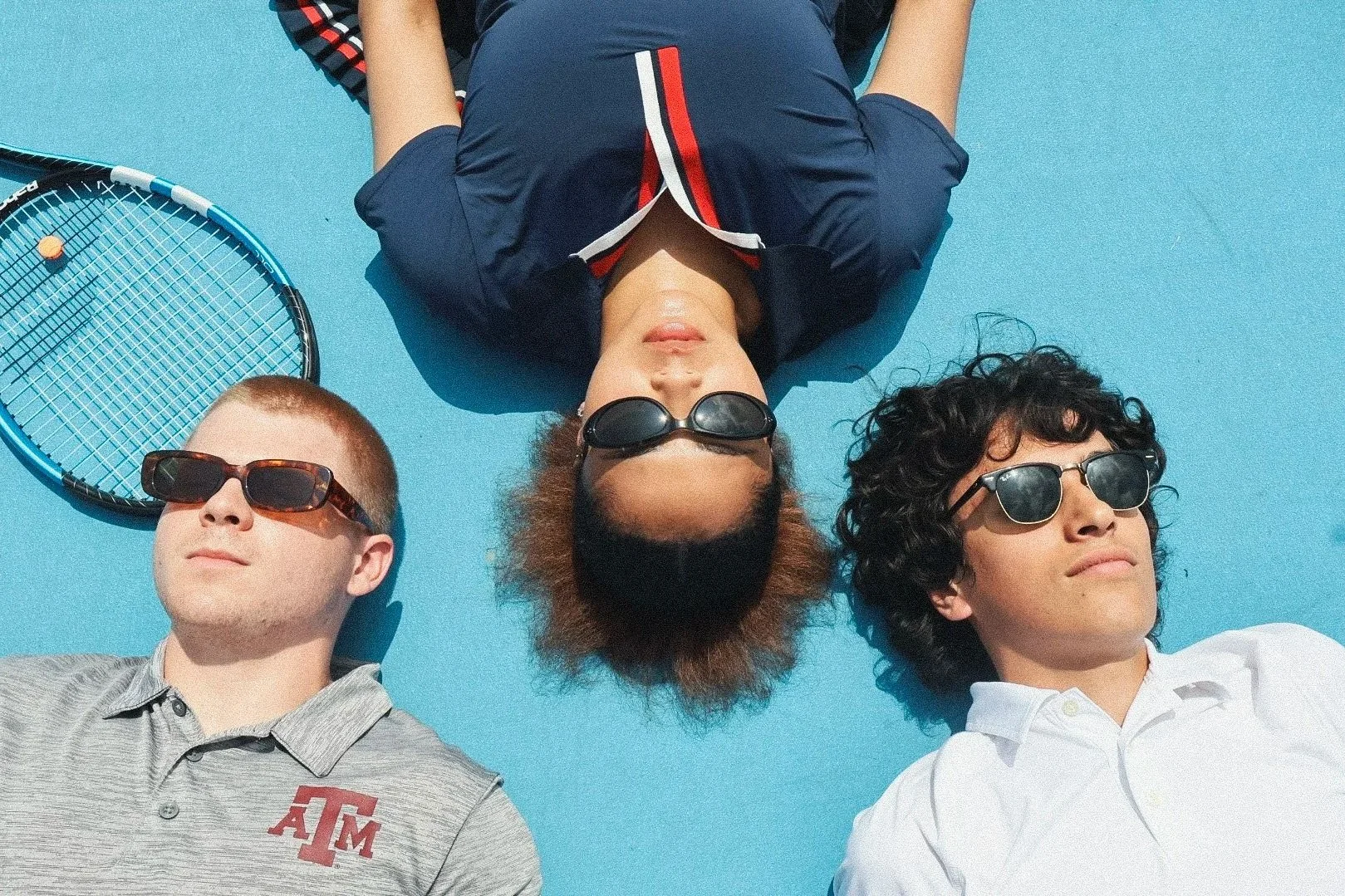
Luca Guadagnino’s Challengers (2024) is less a sports drama than it is a view into the volatile chemistry between ambition, control, and desire. The relationships between Tashi, Art, and Patrick are constantly shifting, as their paths always find a way to cross. Rather than taking the route of a conventional romance, this film analyzes these relationships both on and off the court, looking at how competition and unresolved drama shape them. In Guadagnino’s eyes, tennis is more than a game. The film transforms the sport, using it to show both power and attraction. In Challengers, every rally won and lost contributes to a deeper narrative, one with underlying emotions and tensions waiting to surface.
There are three protagonists in the love triangle: Tashi Duncan, Art Donaldson, and Patrick Zweig. Patrick and Art are two best friends, nicknamed Fire and Ice, who are roped into a fervent competition to win over Tashi. In terms of their personalities, the two men could not be more different: Art is stable and restrained, while Patrick is impulsive and charismatic. Art cleverly decides to pursue collegiate tennis at Stanford, and Patrick shoots for the stars and goes pro the second he gets the chance. Their personalities are portrayed not only through their daily lives, but also in the way they play the game. Art relies on a meticulous and classical technique, while Patrick relies on pure instinct, raw power, and an unconventional, aggressive style. Tashi, who places herself at the center of the trio, is disciplined and self-aware but does not hide her arrogant attitude. Her entire livelihood is driven by tennis, even after her serious injury pulls her out of the game forever. From determined tennis superstar to fanatical coach for Art, she makes her priorities extremely clear throughout every scene in the film.
Upon the protagonists’ meeting at a party and through a later rendezvous, viewers are able to see that both boys are captivated by Tashi. Art and Patrick’s separate relationships with her are both rooted in constant adoration and competition, with Tashi herself acting as the center of their emotional struggle. During the fated bedroom scene, she pits the boys against each other in a competition to win her over. Patrick initially emerges as the winner of this first match, ultimately dating Tashi as his prize. Art distances himself from them, taking on an observant role while finding opportunities to convince the couple to split up. This early dynamic is purely defined by unspoken tension, most clearly seen when Patrick uses his now-infamous serve to signal to Art that he had slept with Tashi—transforming his intimacy with her into a competition between the men and setting the tone for a thirteen-year-long emotional rivalry. Tashi and Patrick’s relationship is volatile and eventually undone by his detachment and her insensitivity, ending in a bitter fight. This leads into Art and Tashi’s seemingly more stable partnership built on mutual dependence, as he is supportive through her traumatic injury and she becomes his tennis coach. However, their relationship is equally consumed by tennis, with Art’s fading passion and Tashi’s rising frustration exposing the fragility of the marriage. Throughout it all, Patrick remains a persistent, disruptive presence, as his on-and-off affair with Tashi reinforces that none of her connections with the men are truly resolved. By the final match, these relationship dynamics come to a head, culminating in Patrick’s repeated signature serve, once again using tennis as a coded language to expose the betrayal and remind Art of the rivalry that never actually ended.
Tashi’s relationships with both Art and Patrick are completely dependent on their identities as star tennis players, as her attraction to them is primarily tied to their discipline, ambition, and performance on the court. This is depicted numerous times throughout the film, most prominently during Tashi and Patrick’s breakup and when Tashi threatens to leave Art if he loses his next match. When either man falls short, either through lack of focus or loss of passion, her connection to them weakens—suggesting that her emotional investment in the men is completely contingent on their engagement with tennis. For viewers, it becomes increasingly clear that tennis is a broader metaphor for a deeper message: romantic desire and power dynamics.
To Tashi, tennis is a relationship. This is a fact she explicitly states to Art and Patrick as she glorifies her final match after the 2006 juniors US Open. Beyond the superficial value of the game, tennis is intertwined with Tashi’s identity, emotions, and connections to others. Her feelings also strongly imply she believes growth is not an individual endeavor. Aspiring and talented players need to surround themselves with a similarly passionate community, one that offers them unwavering support and a grounded environment to promote success and achievement. This is seen in the support her family provides, as we see them cheering her on during her US Open match. Ultimately, Tashi’s belief reveals that for her, tennis is never just about performance or individual triumph. It is about the intense emotional investment, shared energy, and the people who help sustain that ambition.
To Art, tennis is a game about “points that matter.” He tells Patrick this as they sit in the sauna, grappling with their impending final match against each other. Art had been sitting on the decision to retire from his tennis career for a while, only staying in the sport because of his love for Tashi. Having become emotionally distant from tennis, the only points that matter to him are those charged with intense emotional or romantic stakes. If the game does not have a dual purpose—desire, tension, or personal fulfillment—then all of his passion is drained out of the match.
These two views on the sport stand in direct contrast to one another. Art emphasizes outcome, while Tashi emphasizes connection. His perspective argues that the match is defined by the meaningful moments that carry weight and significance, while hers suggests the match is defined by the interaction itself. Viewers can also see this contrast in the way that Tashi and Art behave in their marriage. While Art deeply suffers from the pain of knowing that Tashi will eventually leave him, Tashi is purely focused on the substance that Art can give her in the moment. Art looks for a future with his wife; Tashi looks for a future associated with tennis success.
For many tennis enthusiasts and first-time watchers, it is debatable whether Art or Patrick won the final match. However, the winner of the match is not what Guadagnino intends viewers to focus on. Throughout the film, both Art and Patrick take blows to their personal reputations. Art went on a losing streak as a result of his dwindling passion for the game, and Patrick’s hopes of going pro were quickly diminished. Toward the end of their final match, though, they played a vigorously engaging rally. As Tashi would have noted, they played like they were in a relationship. During the final point, Art jumped to hit the ball and breathlessly fell into Patrick’s arms. In the background, Tashi screams her “real tennis” scream, transitioning from anger to excitement. Art and Patrick were finally playing the game properly, feeling their lost spark quickly return. For the past thirteen years, they had competed for Tashi relentlessly, trading her back and forth whenever she gave them attention. But now, after playing the invigorating match against each other, Art and Patrick were once again able to recognize tennis for what it is, rather than as a means to get to their shared lover.
Challengers was successful at creating complex relationship dynamics that were both compelling and emotionally resonant. Carrying the subtle tennis metaphor throughout the entire film was impressive in itself, especially during the iconic ending. Guadagnino uses tennis as a relationship metaphor for the protagonists, exposing their inability to engage in honest emotional intimacy by replacing verbal communication with the physical passion of a sport. To an even greater degree, sex and intimacy serve to underscore the competition between Art and Patrick, evidenced by their vibrant matches against each other, while also revealing the shifting nature of the relationships each man has with Tashi. Even so, these scenes are not the film’s larger point. As many Guadagnino films explore sensuality and emotional intimacy as a central theme, it is not surprising that Challengers utilizes these same subject matters. Ultimately, Challengers succeeds because it turns a familiar love triangle into something far more layered, using the competitive nature of tennis to expose emotional stakes underneath the surface.
Written by Avery Schnautz, Photography: Uma Menon, Design: Dylan Dougherty, Social Media: Spurthi Challa, Styling: Shri Mulukuntla, Event: Tannie Truong